Shocking Truth About Regular Sanitary Pads
Sanitary pads and tampons, commonly used by women throughout their lives, are classified as “medical devices” in many regions. This classification exempts manufacturers from listing ingredients on the packaging, unlike cosmetics or food products. As a result, consumers often have little insight into what materials are used in these products.
On average, a woman uses around 11,000 pads or tampons in her lifetime. This significant usage raises concerns about both health and environmental impacts. Most disposable pads are made of 90% plastic, including polyethylene, polypropylene, and superabsorbent polymers, which contribute to landfill waste and ocean pollution.
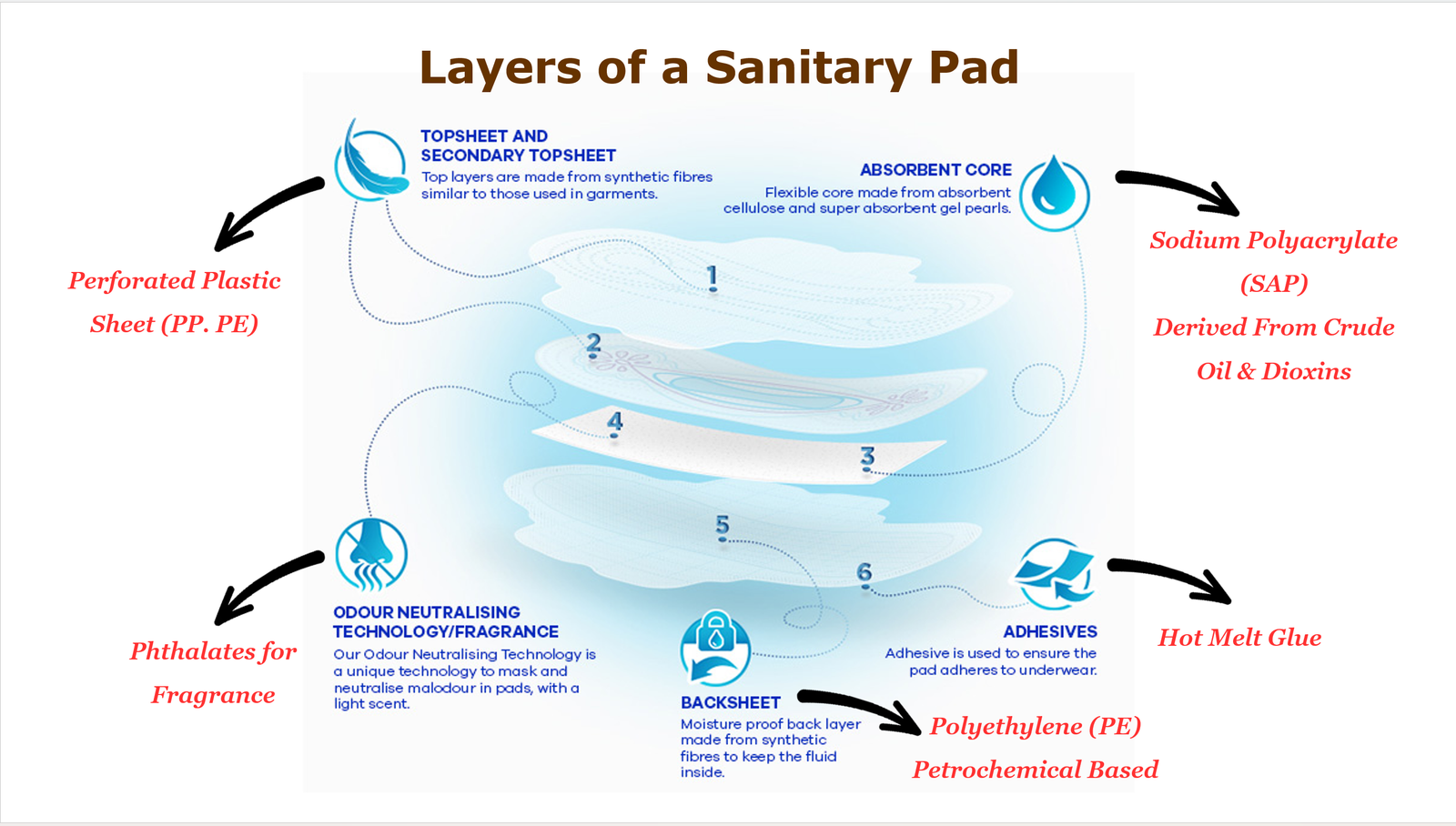
A standard sanitary pad consists of multiple layers:
- Top Sheet – The layer in direct contact with the skin, often made of synthetic fibers or chemically treated cotton to enhance absorption.
- Absorbent Core – Typically a blend of wood pulp and superabsorbent polymers that lock in fluid.
- Back Sheet – A waterproof plastic layer (usually polyethylene) that prevents leaks.
- Adhesive Strip – A sticky material that secures the pad to underwear, also made with synthetic materials.
Because these products are worn for long hours in intimate contact with the body, concerns arise about potential exposure to chemicals such as dioxins, fragrances, and adhesives, which may cause irritation or long-term health risks. Despite these concerns, the lack of ingredient transparency remains a major issue.
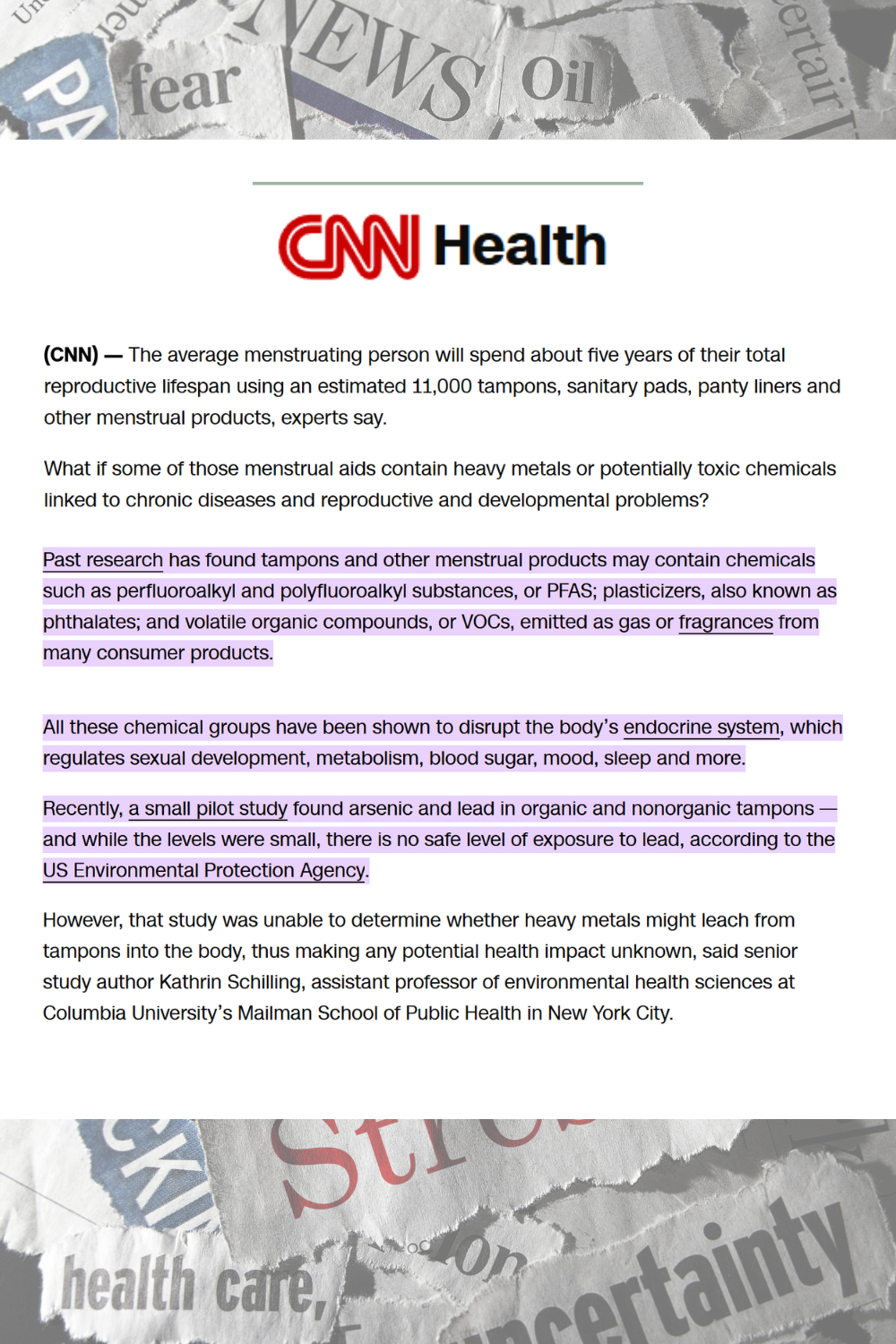
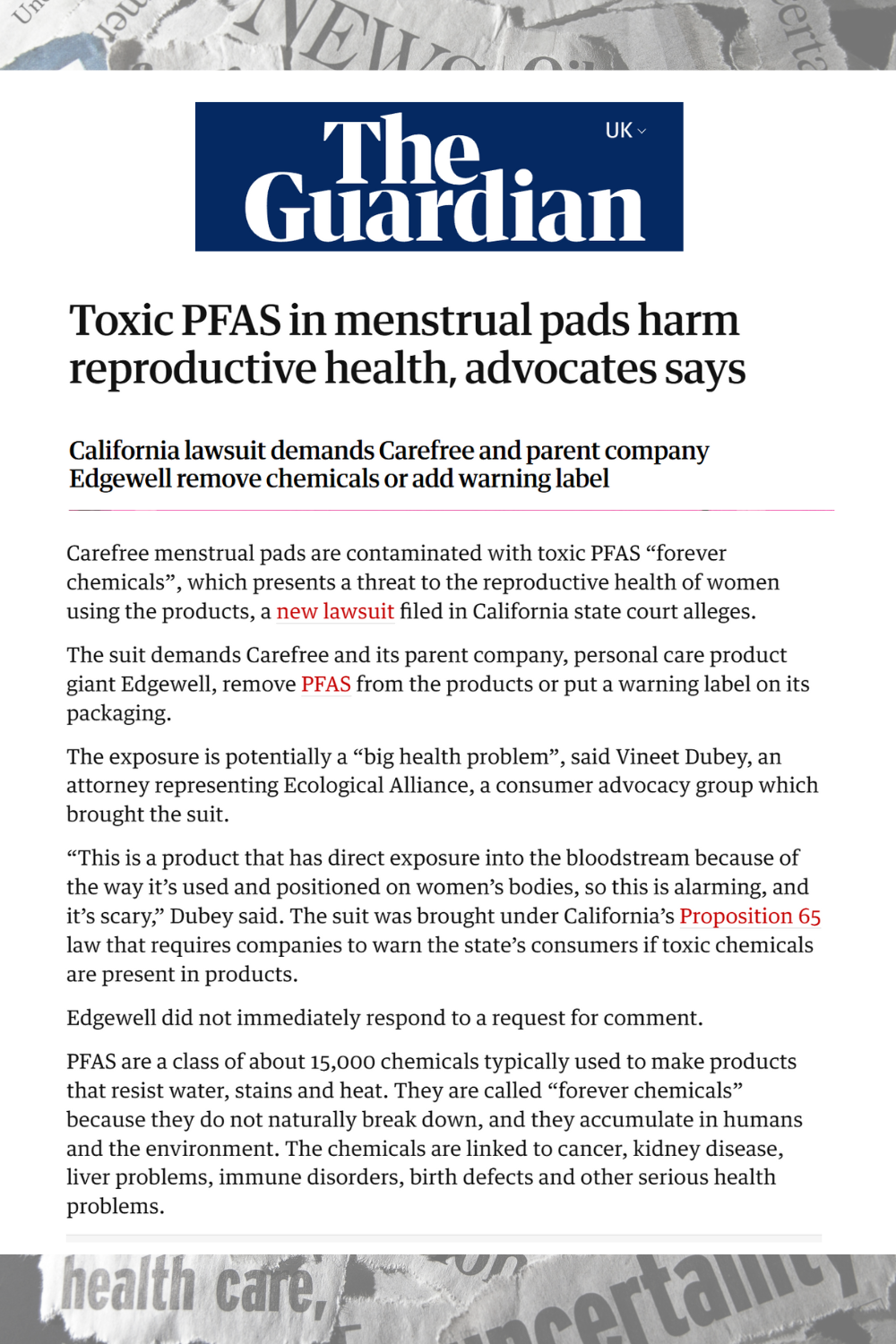
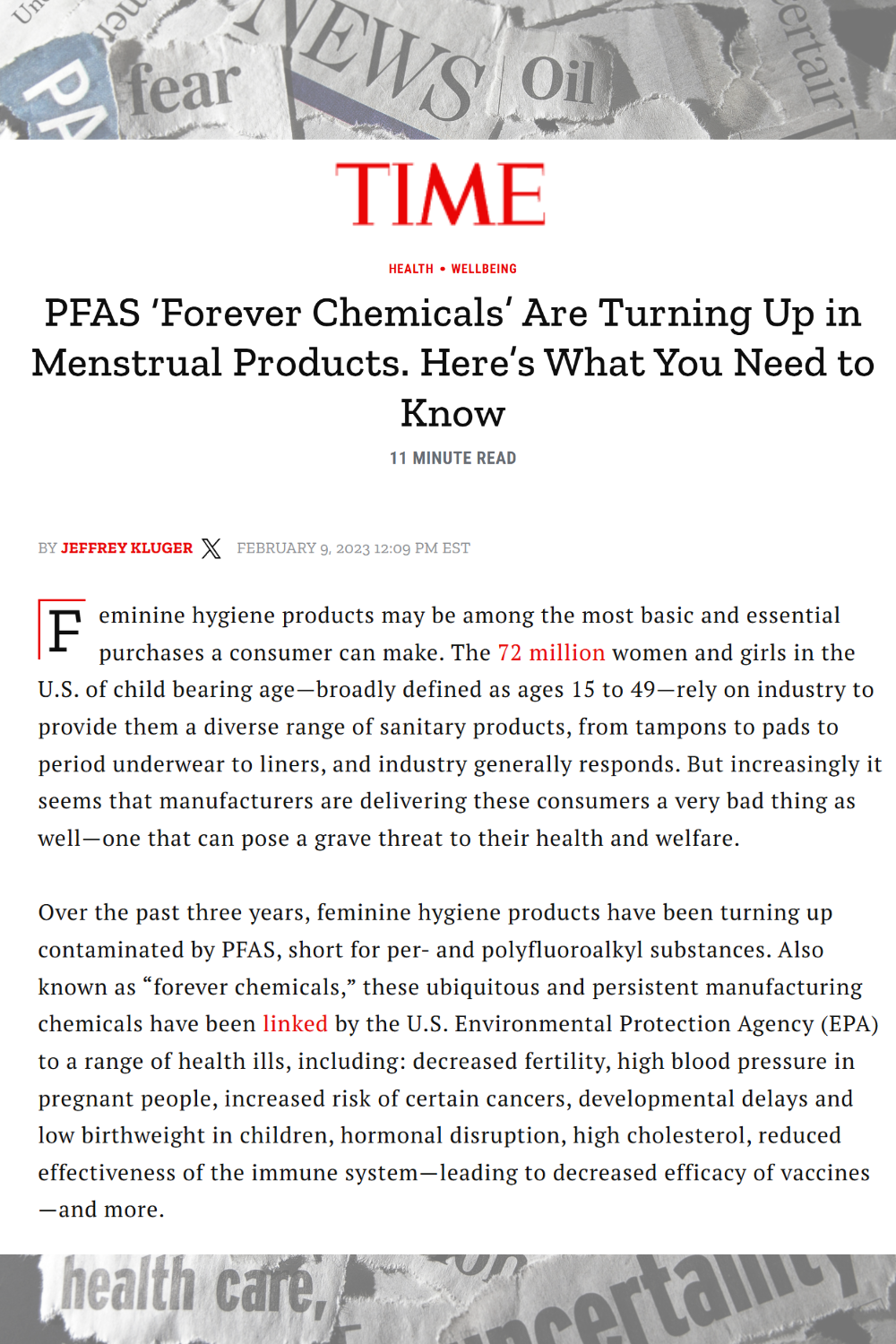
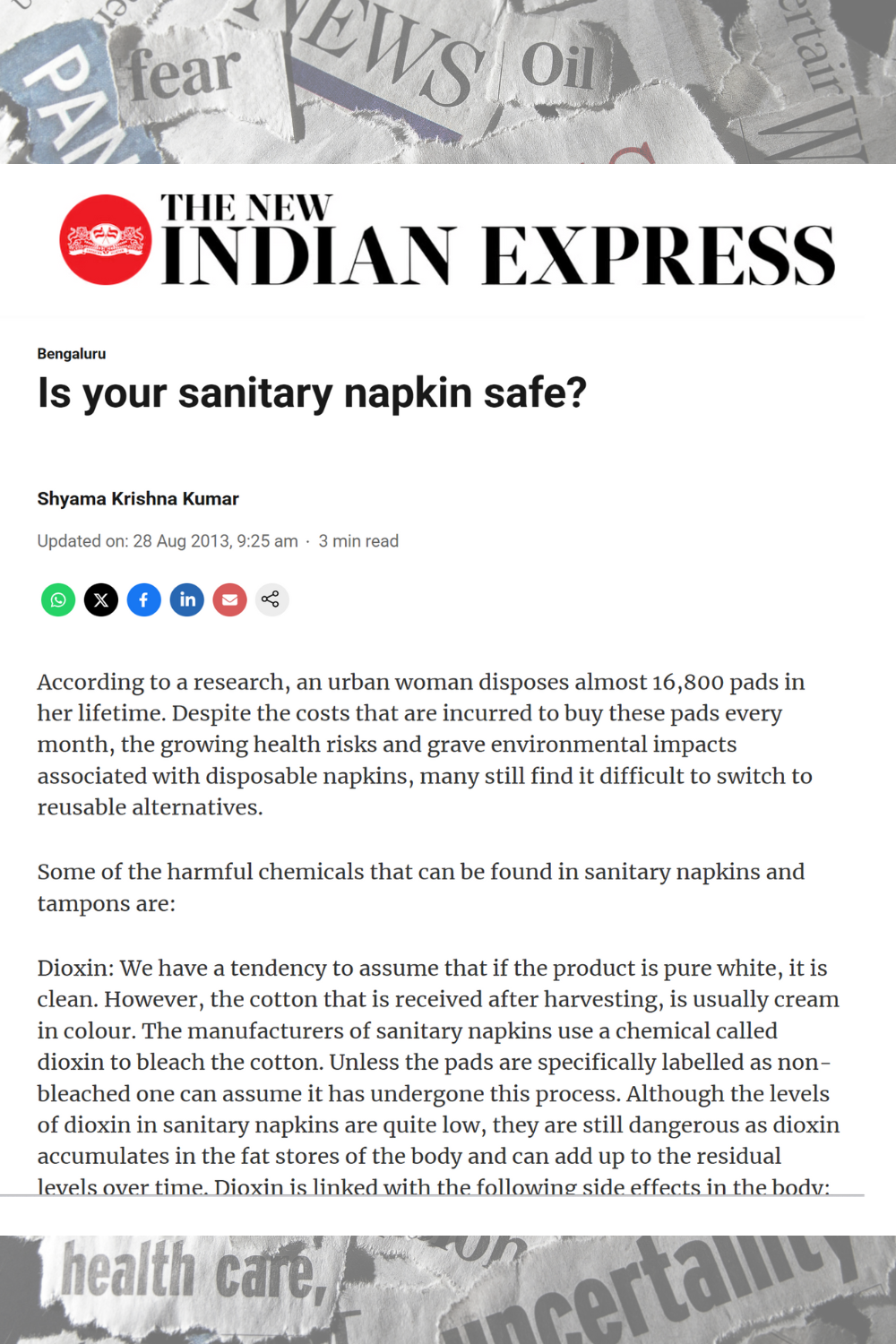
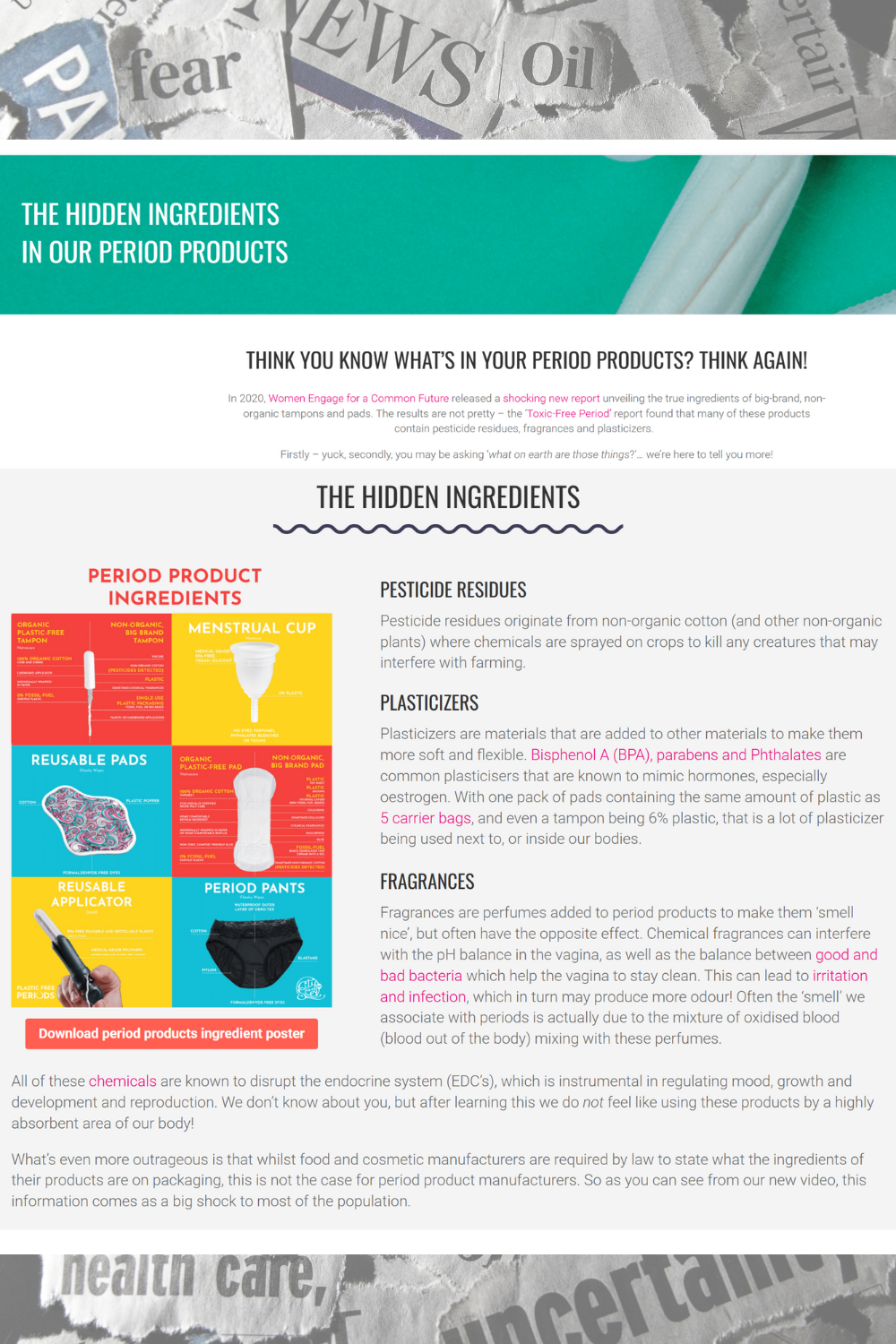
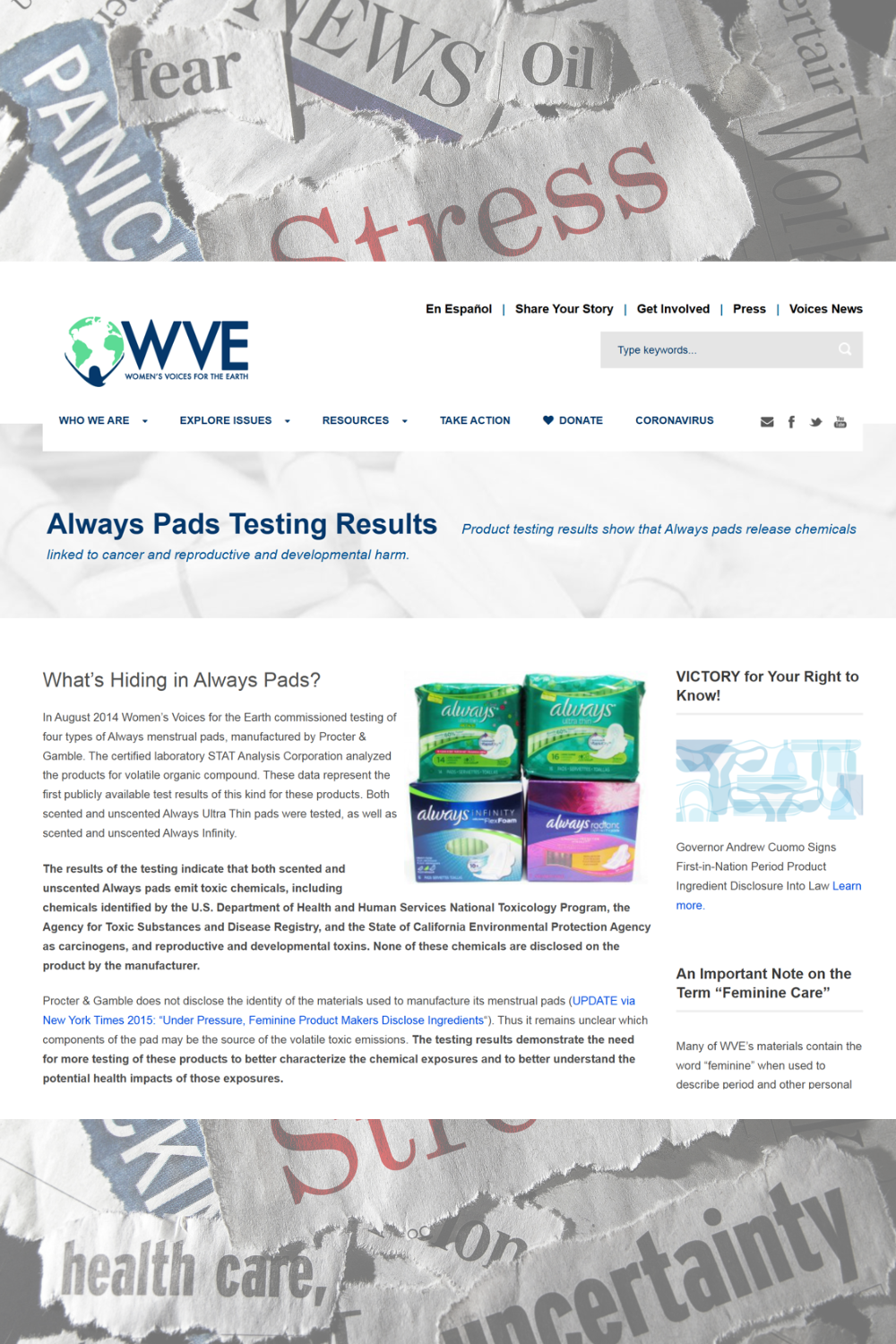
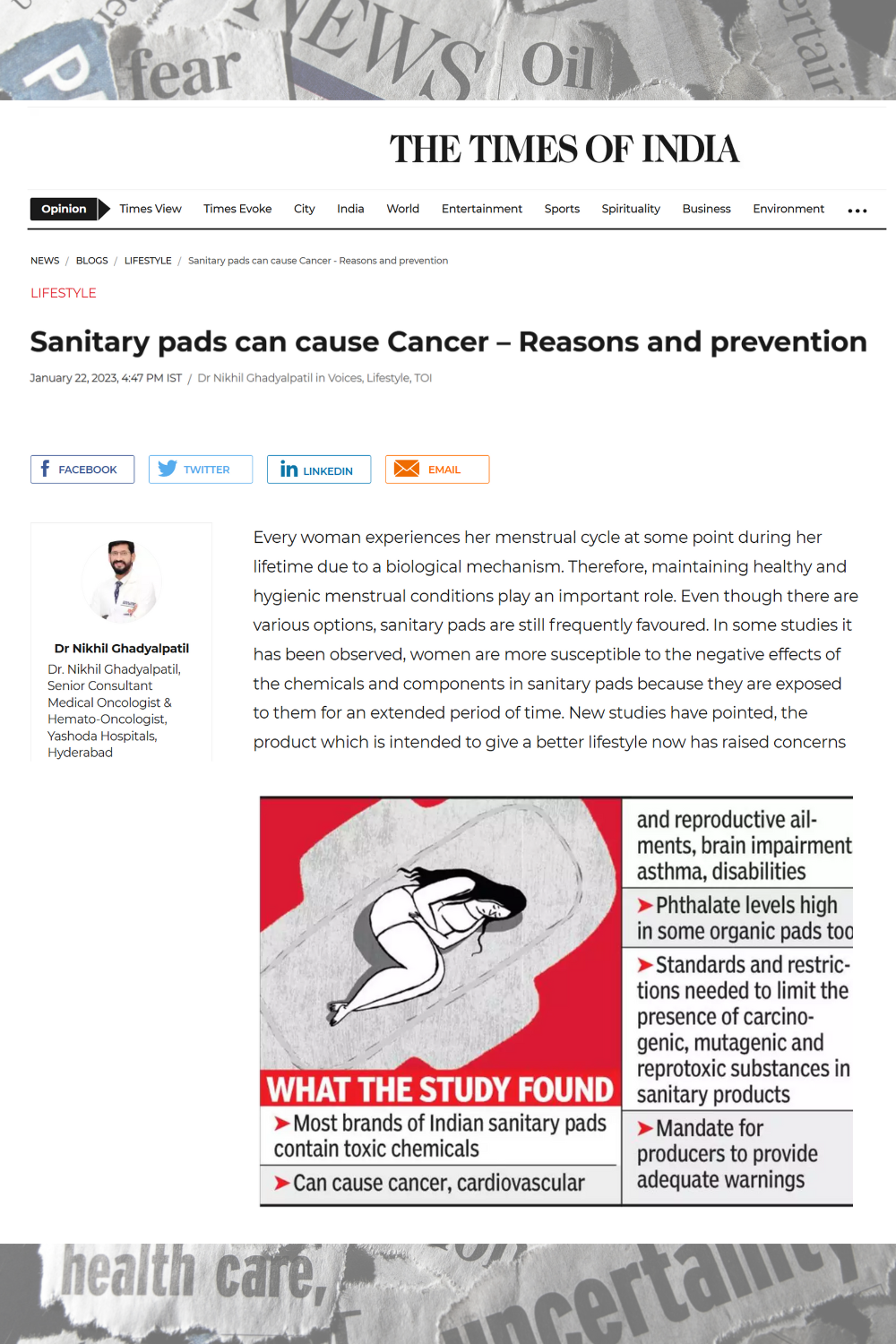
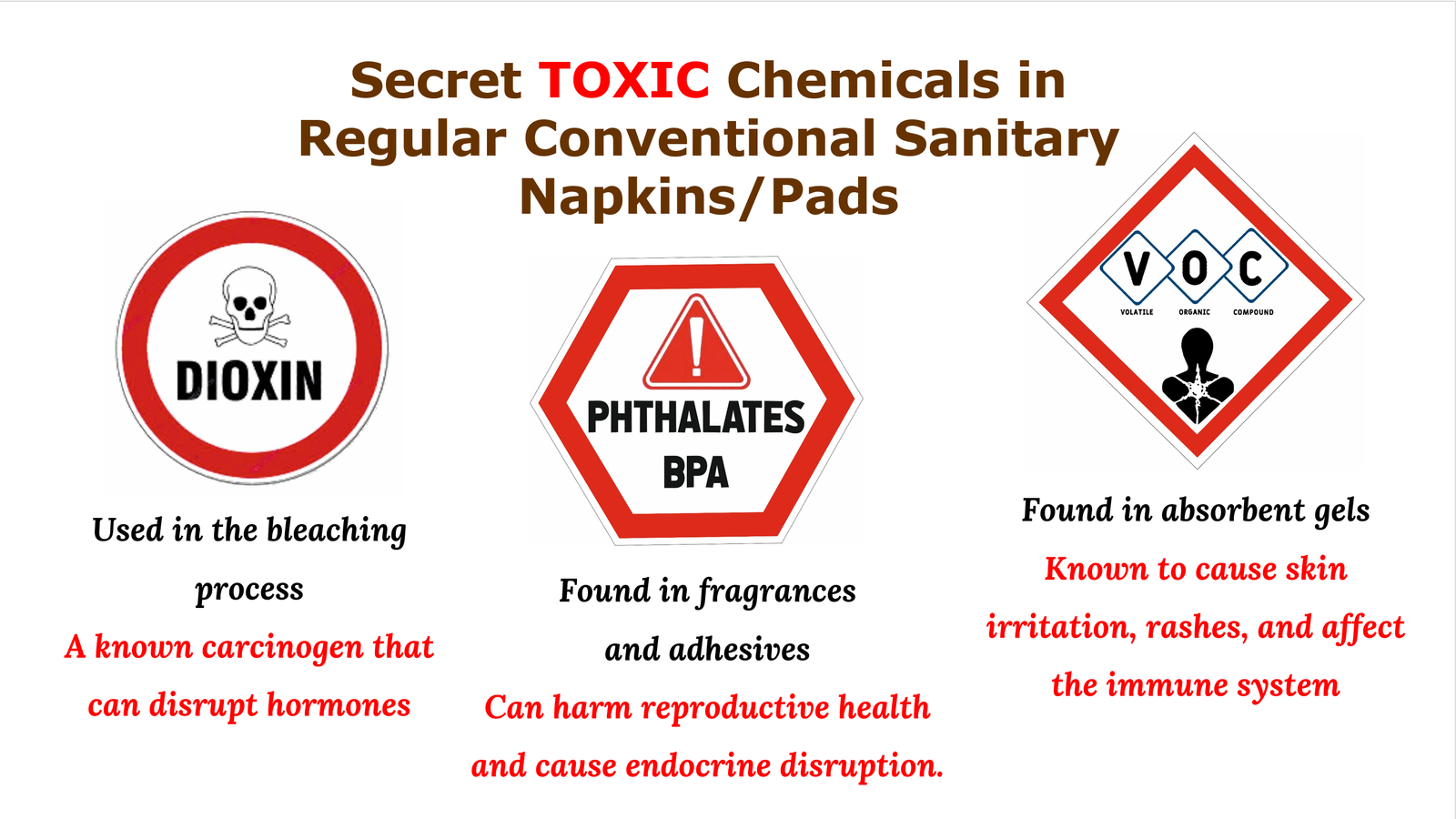
Sanitary pads and tampons often contain toxic chemicals like dioxins, phthalates, volatile organic compounds (VOCs). These substances may pose long-term health risks due to repeated exposure over a woman’s lifetime. Since menstrual products are classified as medical devices, manufacturers are not legally required to disclose ingredients, making it difficult for consumers to make informed choices.
Dioxins are highly toxic environmental pollutants formed as byproducts of industrial processes, especially in the bleaching of cotton and wood pulp used in pads and tampons. Even low exposure to dioxins has been linked to hormonal disruption, immune system damage, reproductive issues, and cancer.
Phthalates are plasticizers used to make plastic components in sanitary pads (such as the top sheet and back sheet) more flexible and soft. They are known as endocrine disruptors, meaning they interfere with hormone function and may contribute to infertility, birth defects, and metabolic disorders.
VOCs like benzene, toluene, and xylene are commonly found in synthetic materials and adhesives used in pads. These chemicals have been linked to headaches, dizziness, organ toxicity, and even neurological damage with prolonged exposure.
The World Health Organization (WHO) states that dioxins are carcinogenic (cancer-causing) and disrupt hormonal balance.
A study published in the journal Environmental Health Perspectives (2002) found that dioxins accumulate in the body over time, leading to potential long-term risks such as endometriosis and immune suppression.
A study by Women’s Voices for the Earth (2014) detected phthalates in sanitary pads, raising concerns about their potential absorption through prolonged skin contact.