Dangers and Harms
The Effects of Conventional Sanitary Pads on Your BodyHealth Risks of Long-Term Exposure to Chemicals in Sanitary Pads
Sanitary pads contain various harmful chemicals, including dioxins, phthalates, volatile organic compounds (VOCs), and pesticide residues. While exposure to these chemicals may be minimal in a single-use pad, their cumulative effect over a woman’s lifetime considering an average use of 11,000 pads or tampons raises significant health concerns.
Chemicals such as phthalates, dioxins, and certain VOCs can act as endocrine disruptors, meaning they interfere with the body’s natural hormone regulation. These compounds mimic or block estrogen and progesterone, leading to hormonal imbalances.
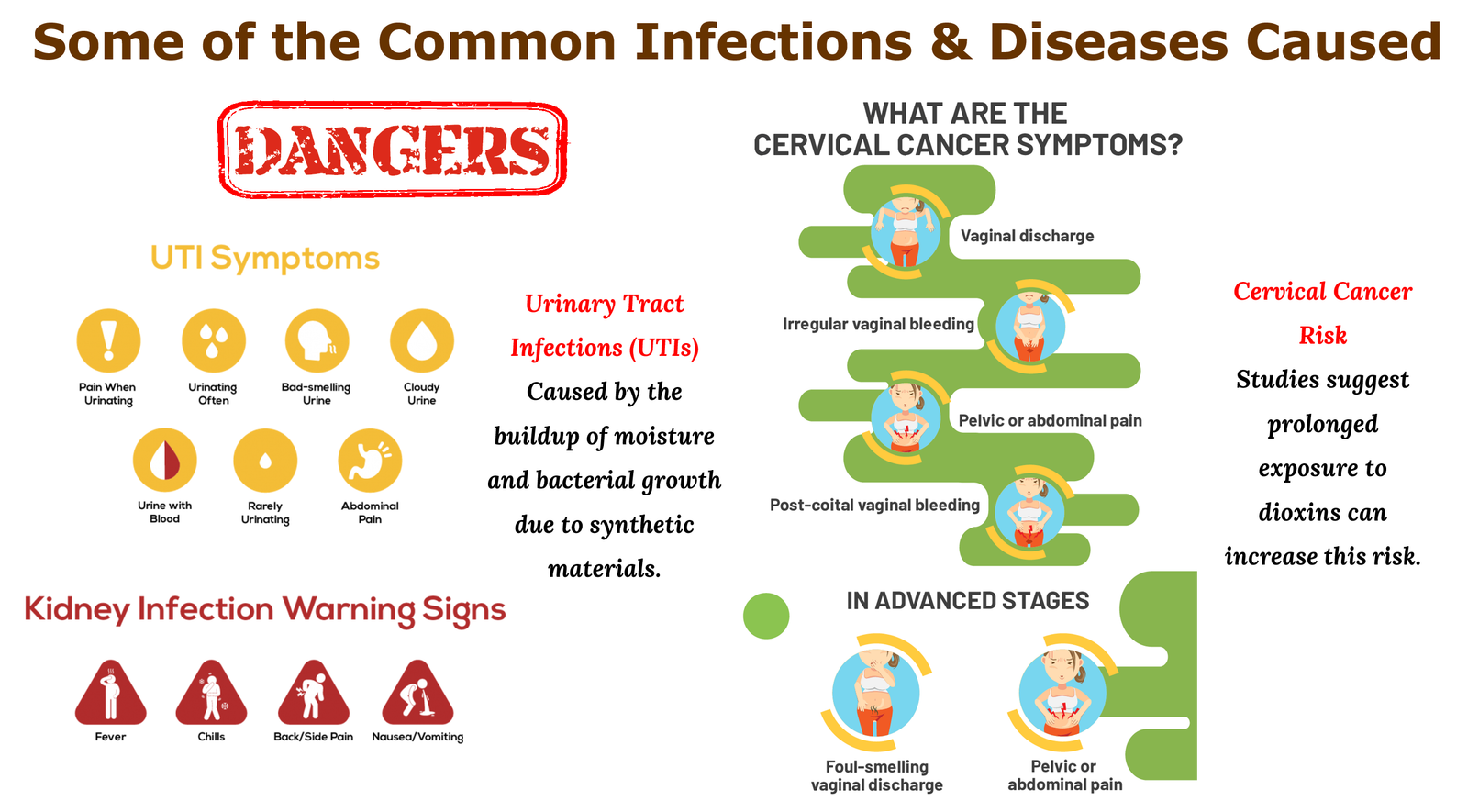
Dioxins, furans, and pesticide residues used in cotton production have been linked to increased risks of breast, ovarian, and cervical cancers. Cotton used in pads may contain pesticide residues such as glyphosate, a herbicide classified as “probably carcinogenic” by the World Health Organization (WHO). Research also suggests that long-term exposure to phthalates may contribute to ovarian cancer by promoting inflammation and disrupting normal ovarian function.
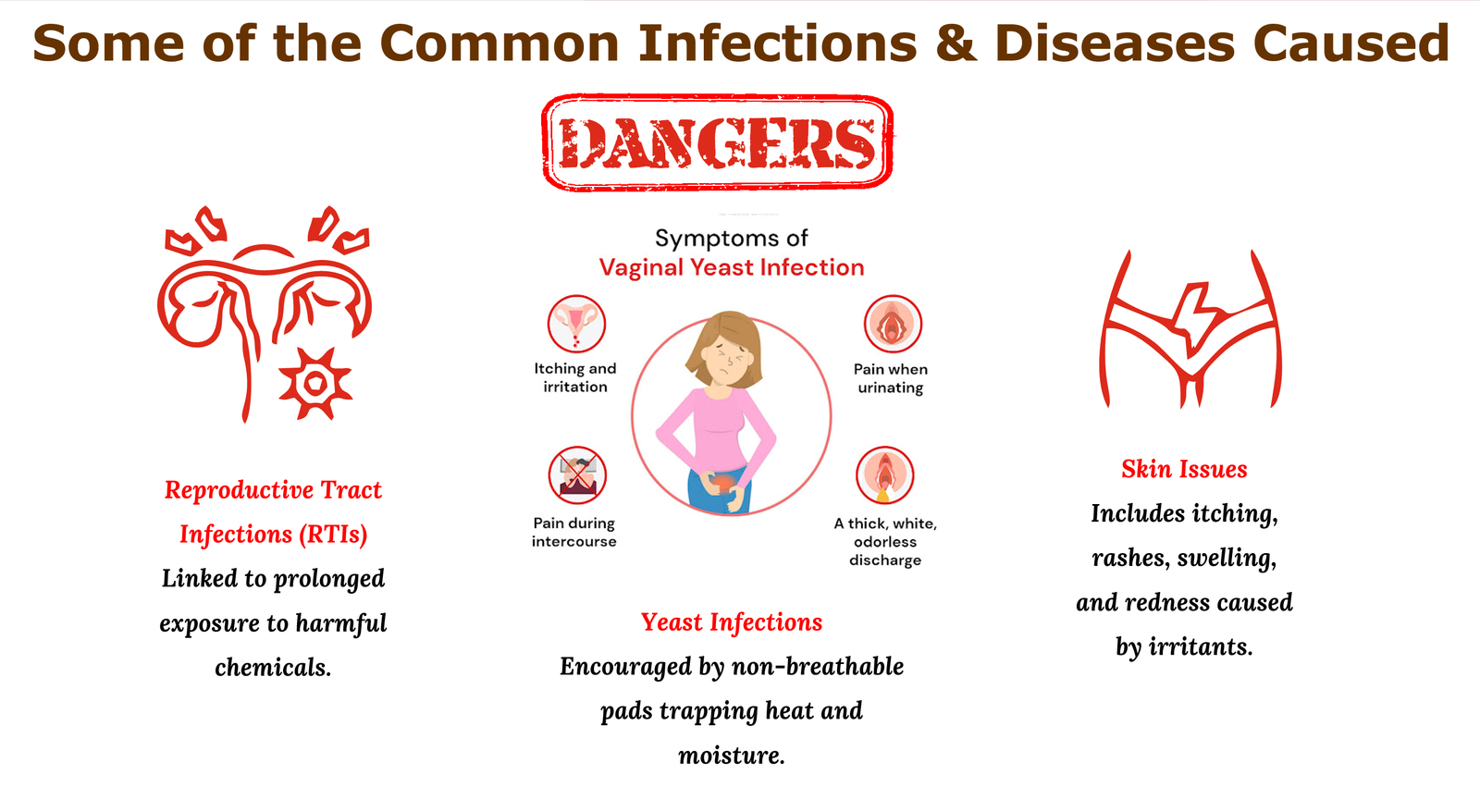
The top layer of sanitary pads, which comes in direct contact with the skin, is often made of synthetic materials, and chemical-based fragrances. The plastic-based top sheet in many pads traps moisture and heat, creating an ideal environment for bacterial growth, leading to skin irritation, infections, and rashes. Synthetic fragrances and dyes contain VOCs like toluene and benzene, which can cause itching, burning, and contact dermatitis.
The WHO has classified dioxins as Group 1 carcinogens, meaning they have a proven link to human cancers.
A 2019 study in the Journal of Clinical Endocrinology & Metabolism found that women with higher phthalate exposure had significantly higher risks of irregular menstruation and reduced fertility.
A 2020 study in Environmental Research reported that women with higher phthalate levels had a 20% higher risk of pregnancy loss and reduced fertility.
Research published in Environmental Health Perspectives linked dioxin exposure to abnormal menstrual cycles and reproductive disorders.