Planet & U
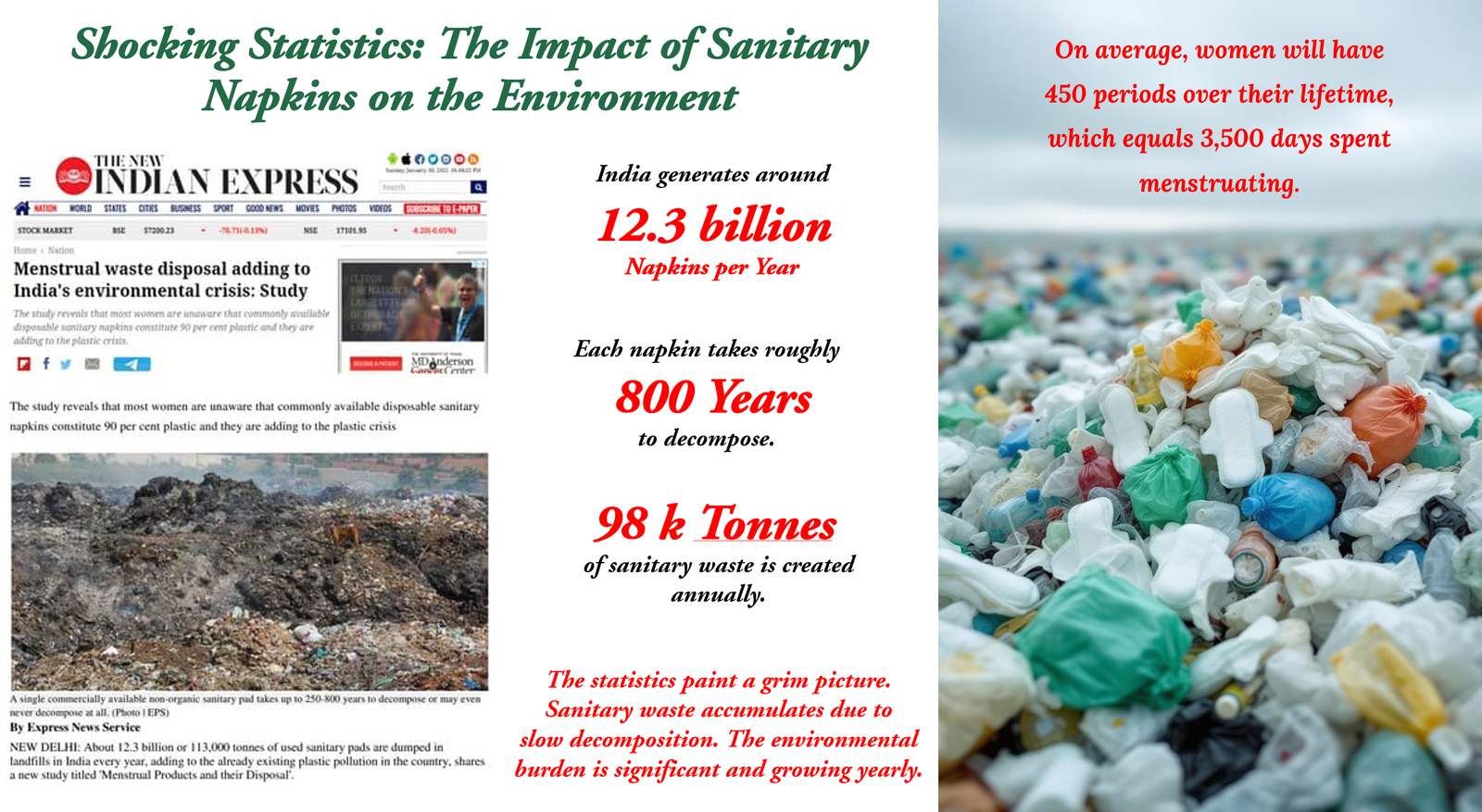
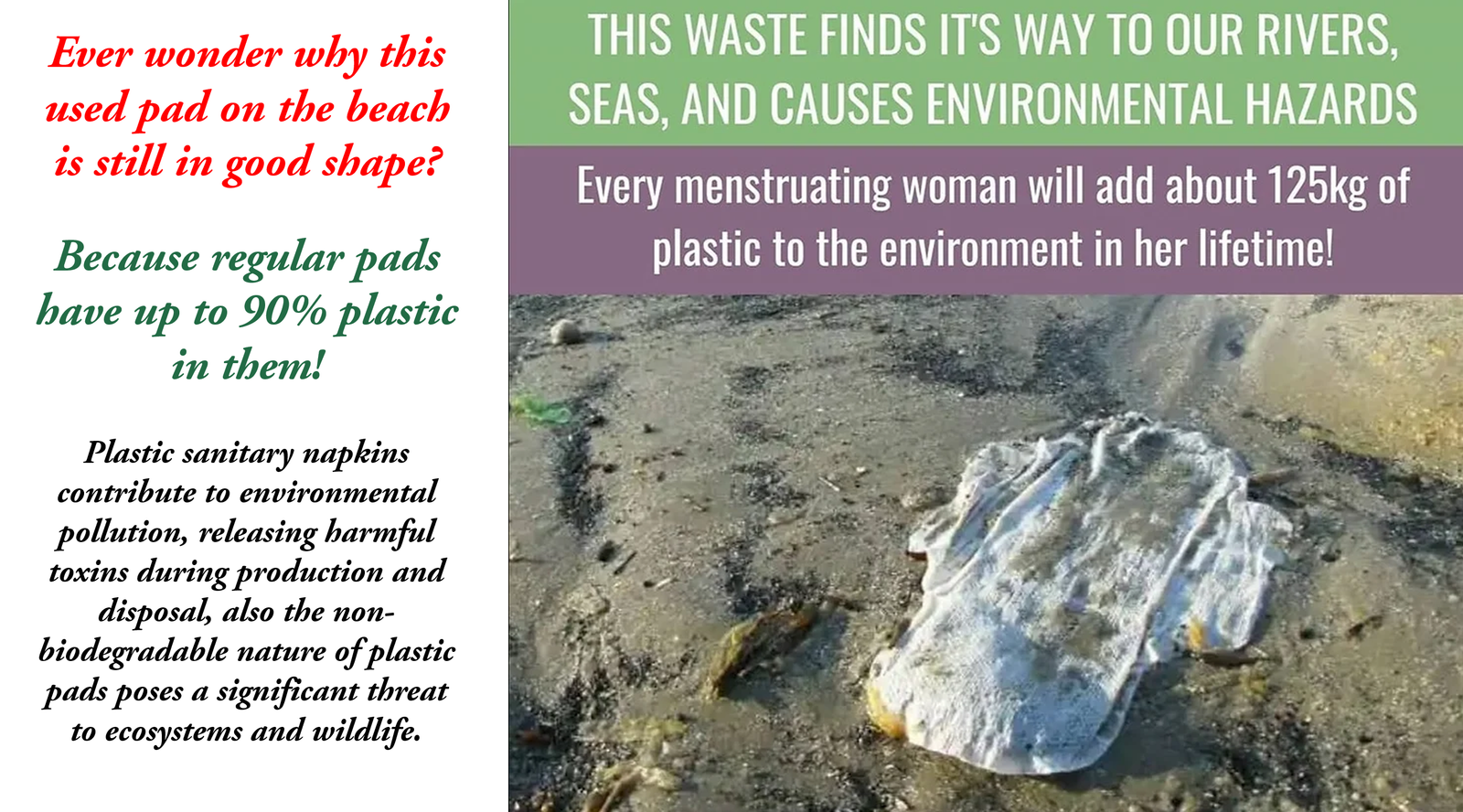
Sanitary pads are a major source of plastic waste and environmental pollution due to their synthetic composition and non-biodegradable materials. A single disposable pad can take 500 to 800 years to decompose, contributing to long-term environmental damage.
- 90% of a regular pad is plastic, including polyethylene, polypropylene, and superabsorbent polymers (SAPs).
- A single woman uses around 11,000–16,000 pads in her lifetime, generating 125–150 kg of menstrual waste.
- Globally, 12 billion pads and tampons are disposed of annually, mostly ending up in landfills, oceans, or incinerators.
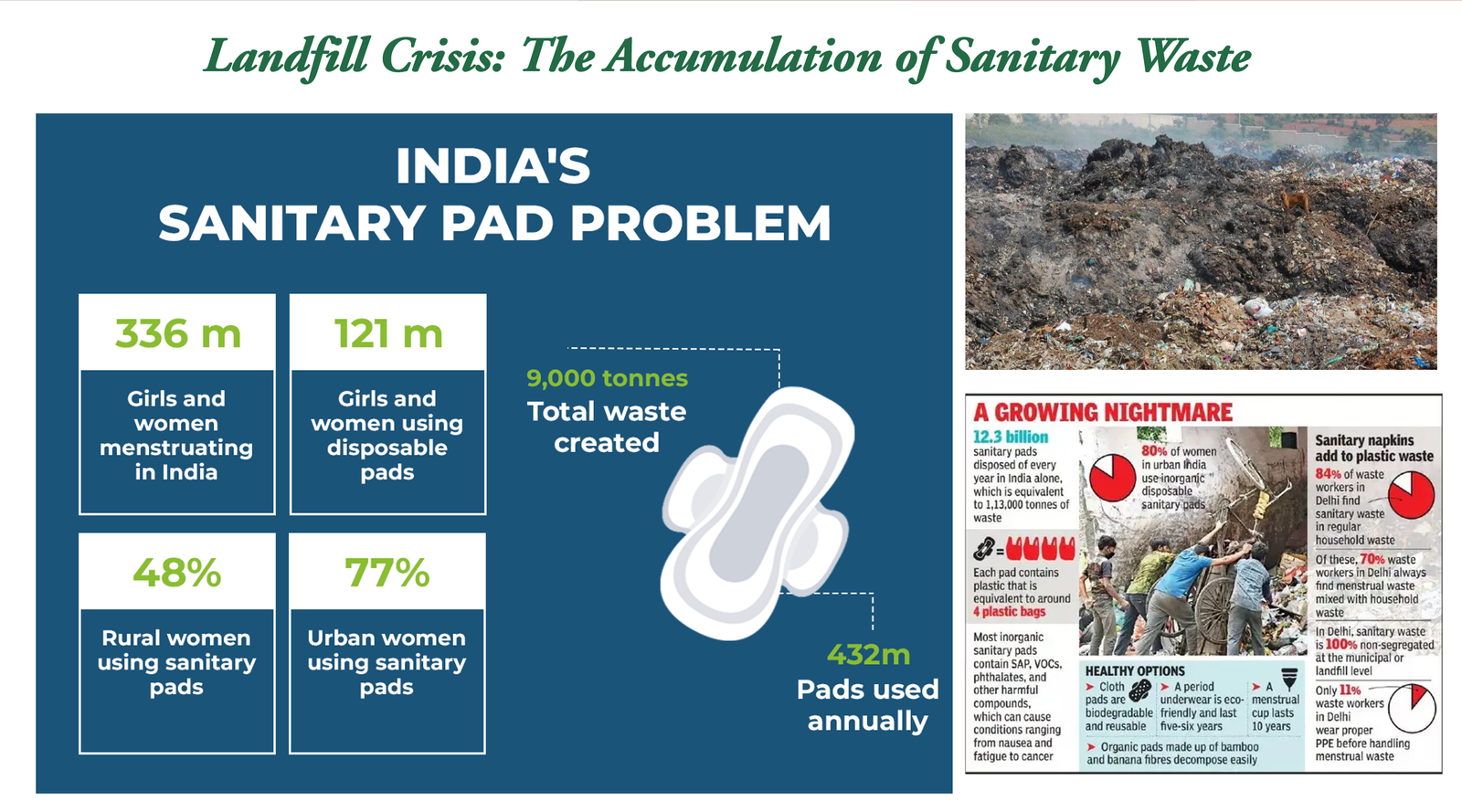
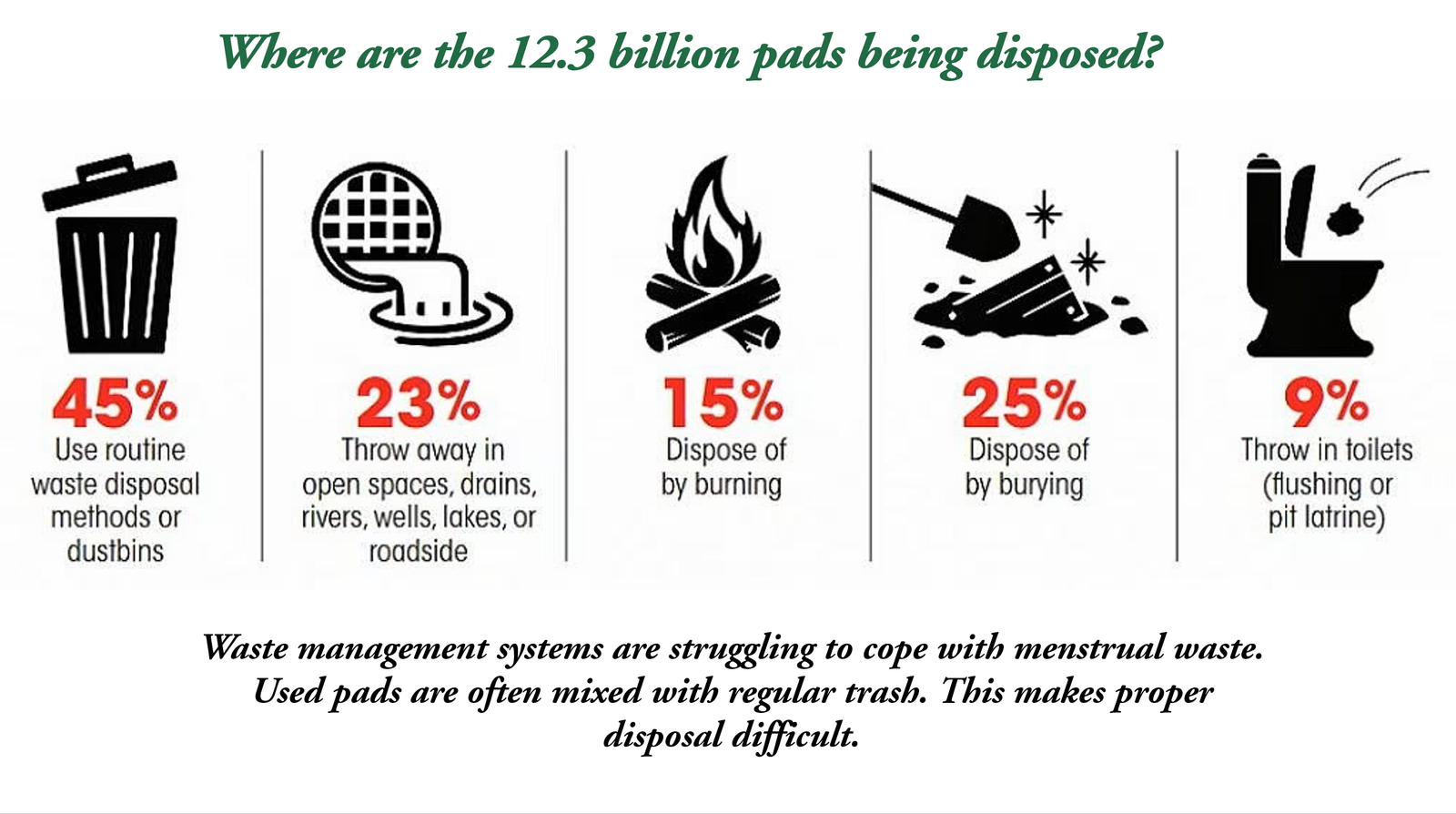
India has around 336 million menstruating women, yet only 36% use disposable pads due to affordability and accessibility issues. This still results in over 1 billion non-biodegradable pads being discarded every month. The majority of menstrual waste is not segregated and is either burned, dumped in landfills, or flushed into sewage systems.
Each conventional pad contains about 3.4 grams of plastic, equivalent to four plastic bags. A single menstruator generates about 125 kg of plastic waste in her lifetime just from pads. Over 1.5 million waste pickers (many of them women and children) handle discarded menstrual products without protective gear. Used pads often contain bloodborne pathogens, exposing waste workers to infections like hepatitis B, HIV, and fungal diseases.